Ten minutes of planning is the difference between a good day out and a stressful one. This is a simple routine that scales from a harbor hop to a longer coastal run.
Weather and tides first
Start with the marine forecast (wind, seas, any warnings) and the tide where you're headed. Build the trip around a window that's at least safe, and jot down the times of high and low water at your destination.
Lay out the route
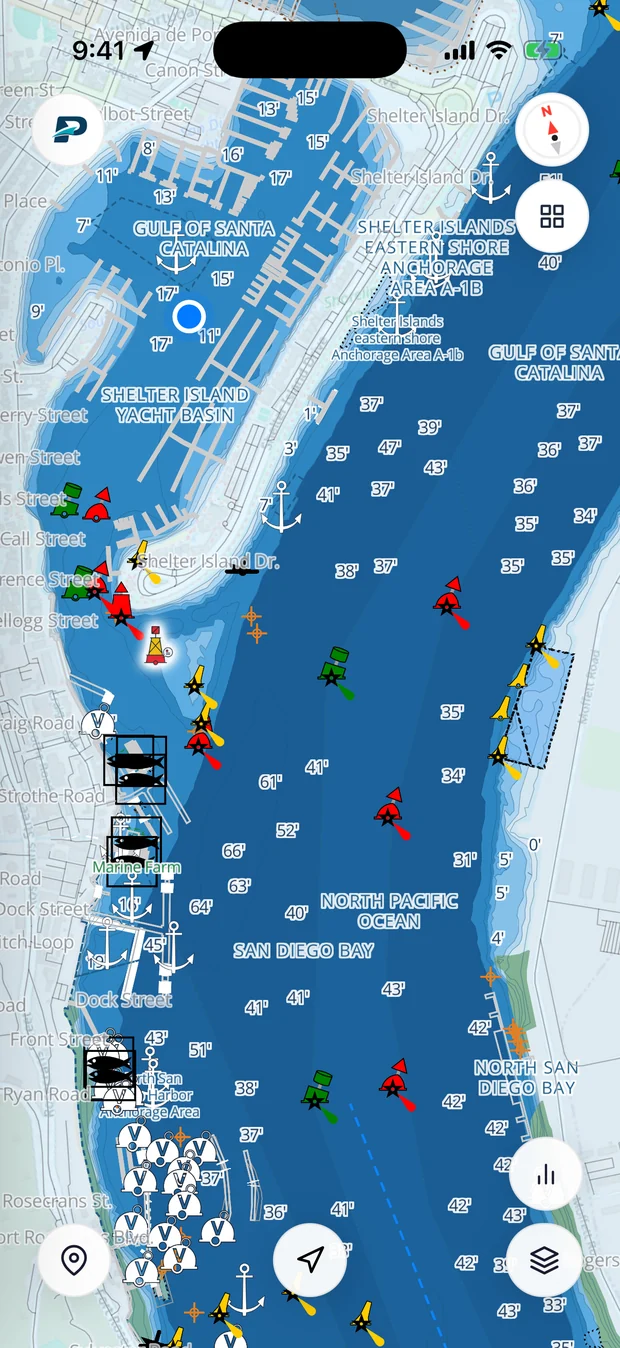
Sketch a line that keeps you in enough water for your boat, clears the rocks and shoals, and runs past buoys and landmarks you can actually pick out. Split it into legs between waypoints. A depth-aware app like Pathr will build a safe route for your draft and flag the sketchy bits for you.
Time and fuel
Take the distance, divide by your cruising speed, and you've got a rough passage time. Then pad it for wind, current, and stops. On fuel, the old thirds rule still holds up: a third to get there, a third to get back, a third you don't touch.
Tell someone
Leave a float plan with a person ashore: where you're going, who's aboard, when you'll be back. If you don't check in, they know to make a call. It costs nothing and it has pulled plenty of people off the water alive.
Check the gear
Life jackets for everyone, a VHF that works, something to signal with, a first aid kit, water and food. A quick trip checklist stops you from realizing at the fuel dock that the bag still sitting on the kitchen counter had the flares in it.
Have an out
Pick your bail-out points before you leave: harbors or anchorages you can slip into if the weather turns or something breaks. The skippers who know their escape routes ahead of time are the ones who look calm when it matters.